Dog Cooling Vests: How They Work and How to Choose
- Do Dog Cooling Vests Actually Work?
- How Each Type of Cooling Vest Works
- Which Type Should You Buy? Quick Verdict Table
- How to Choose: The Criteria That Actually Matter
- Worth Knowing: The Honest Drawbacks
- Beyond the Vest: Cooling Mats and Other Hot-Weather Gear
- How to Keep a Dog Cool on Walks: The Routine Around the Gear
- Bottom Line
Do Dog Cooling Vests Actually Work?
Yes — with caveats that matter. A dog cooling vest lowers the temperature at your dog's body surface using evaporation, chilled inserts, or reflective fabric, and in the right conditions that genuinely reduces heat load during walks, hikes, and outdoor downtime. What a vest can't do is override a dog's core cooling system. Dogs shed most heat by panting, so a vest is an assist, not a substitute for shade, water, and sensible timing.
The honest summary before we get into picks and types:
- Evaporative vests are the best all-rounder for most dogs in dry or moderate climates — light, simple, no freezer required.
- Ice-pack and phase-change vests deliver the strongest chill for short, intense sessions, but they're heavier and time-limited.
- Reflective heat-shield vests don't actively cool, but they block solar gain and pair well with the other two approaches.
- No vest makes hot weather safe. High heat plus humidity is dangerous for any dog, vest or not — flat-faced breeds especially. When in doubt, skip the outing and ask your vet about your dog's individual heat tolerance.
How Each Type of Cooling Vest Works
Evaporative cooling vests
An evaporative cooling vest for dogs works the way sweat works on you. You soak the vest in cool water, wring it out, and put it on. As water evaporates from the fabric, it pulls heat away from the dog's body. Many designs use multiple layers: an outer layer that reflects sunlight, a middle layer that stores water, and an inner layer that transfers cooling to the coat.
Ruffwear's Swamp Cooler is a widely available example of this category and a reasonable benchmark for what a well-made evaporative vest looks like: light-colored reflective fabric, generous back coverage, and a soak-wring-wear routine that takes under a minute.
The catch: evaporation needs dry air. In humid conditions, water evaporates slowly, cooling drops off sharply, and a soaked vest can end up acting more like a warm, wet blanket. If you live somewhere muggy, temper your expectations for this whole category.
Ice-pack and phase-change vests
These vests hold removable inserts — either gel packs you freeze or phase-change panels that chill at a set temperature. They don't depend on evaporation, so they keep working in humidity, and the initial cooling sensation is stronger.
The catch: the inserts add real weight, the cooling window is finite (often an hour or less of meaningful chill, depending on conditions and insert type), and you need freezer access to recharge them — awkward mid-hike. Very cold inserts should never sit directly against bare skin; quality designs put fabric between insert and dog.
Reflective heat-shield vests
These are essentially sunshades your dog wears: light-colored or metallic-finish fabric that reflects solar radiation instead of absorbing it. Dark-coated dogs gain a lot of heat from direct sun, so blocking that gain is worthwhile — but there's no active cooling happening.
The catch: in shade, or after sunset, a reflective vest does very little. It's a complement, not a standalone solution.
Which Type Should You Buy? Quick Verdict Table
| Type | Best for | Cooling strength | Duration | Weight | Humid-climate performance |
|---|---|---|---|---|---|
| Evaporative | Daily walks, hiking, dry climates | Moderate | 1–3 hours per soak (varies) | Light | Poor |
| Ice-pack / phase-change | Short intense activity, humid regions | Strong | Limited by insert | Heavy | Good |
| Reflective shield | Dark-coated dogs, sunny exposure | None — blocks solar gain only | N/A: nothing to soak, freeze, or recharge | Very light | Unaffected by humidity |
Prices across the category typically run from around $20 for basic evaporative designs to $100 or more for premium or insert-based vests, with size affecting cost. Treat anything dramatically cheaper with suspicion — thin single-layer fabric dries out fast and cools little.
Our verdict: most owners should start with a quality evaporative vest. It covers the everyday use case — walks and hikes in warm, reasonably dry weather — at the lowest weight and fuss. Add ice-pack cooling only if you're in a humid climate or doing short bursts of hard activity, and consider a reflective layer if your dog is dark-coated and spends real time in direct sun.
How to Choose: The Criteria That Actually Matter
We evaluate cooling vests the same way we evaluate any wearable dog gear: fit first, function second, convenience third.
Fit and coverage. A cooling vest only works where it touches. Look for coverage over the back and, ideally, the chest — large muscle areas where heat exchange helps most. The vest should sit snug enough to keep contact with the coat but never restrict shoulder movement or breathing. Sizing runs by chest girth and back length, and the process is the same as sizing a harness — our guide on how to measure a dog for a harness walks through getting accurate girth numbers. Between sizes? Size up. That's our default across wearable dog gear: a larger vest can be snugged down with the adjusters until it makes good contact, while a too-small one has no way out of restricting stride and breathing. Check the maker's chart before ordering, since girth ranges and cut vary a lot between brands.
Harness compatibility. If your dog walks in a harness, decide upfront whether the vest goes under or over it. Some vests include a leash-clip pass-through or are cut to layer under a harness; others aren't. A vest that fights your walking gear will stay in the closet.
Water retention and dry-out time. For evaporative vests, thicker multi-layer construction holds more water and cools longer between re-soaks. Single thin layers can dry out within a half hour in hot wind. Plan to bring extra water on longer outings — for the vest and for drinking.
Ease of on/off. Side-release buckles or wide hook-and-loop panels matter more than you'd think when you're re-soaking a vest mid-hike with an impatient dog.
Durability and washability. Trail use means dirt, burrs, and creek dunks. Machine-washable fabric and solid stitching around buckle points are worth paying for.
Worth Knowing: The Honest Drawbacks
Every option in this category has a real trade-off. Beyond the per-type catches above:
- Some dogs hate wearing them. Introduce any vest indoors with treats before expecting your dog to work in one.
- Wet fabric on a thick double coat can backfire. Dense-coated breeds may trap moisture against the undercoat without much cooling benefit. For heavy-coated dogs, ask your vet or groomer what makes sense before investing.
- A vest can mask early warning signs. Owners sometimes push a dog further because "the vest is handling it." It isn't. Watch your dog, not the gear.
Beyond the Vest: Cooling Mats and Other Hot-Weather Gear
A cooling vest is one piece of a hot-weather kit, not the whole kit.
- Cooling mats — pressure-activated gel mats or water-fillable pads give your dog a cool surface for rest stops, crates, and car rides. A cooling mat for dogs is arguably the better first purchase for dogs who overheat at home or in the car rather than on the move. Supervise chewers: punctured gel mats are done, and you don't want the contents ingested.
- Collapsible water bowls and extra water — non-negotiable. Evaporative gear increases your water budget.
- Cooling bandanas — cheap, and most dogs tolerate them more readily than a full vest. The effect is genuinely mild, though, and for a structural reason: a bandana covers a fraction of the surface area a vest does, and it sits at the neck rather than over the large back and chest muscles where heat exchange does the most good. Fine as a small assist on a mild day; not a substitute on a hot one.
- Paw protection — hot pavement burns pads. If you can't hold the back of your hand on the asphalt for several seconds, walk on grass or wait for evening.
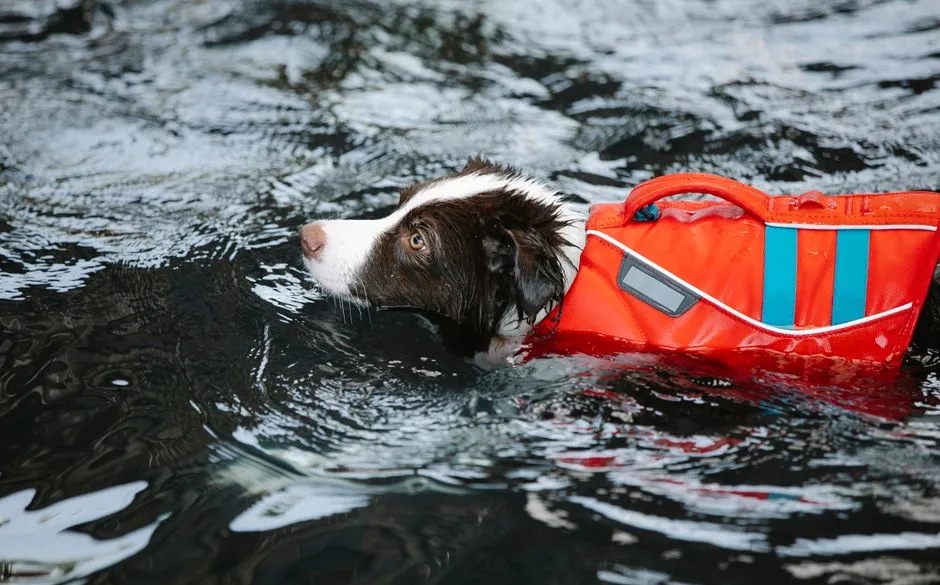
If summer plans include the car, the trail, or the lake, our dog travel gear checklist covers the full packing list — and for water outings, a cooling vest is not flotation; that job belongs to a properly fitted option from our best dog life jackets guide.
How to Keep a Dog Cool on Walks: The Routine Around the Gear
Gear helps most when the routine is right:
- Shift timing. Early morning and post-sunset walks beat midday by a wide margin — air and pavement are both cooler.
- Pre-soak the vest just before leaving, not an hour ahead.
- Shorten and slow down. Cut distance and let your dog set the pace. Sniffy walks over sprints.
- Break in shade every 10–15 minutes in real heat, offering water each time.
- Know your dog's risk profile. Flat-faced breeds (Bulldogs, Pugs, Boxers), seniors, overweight dogs, and thick-coated breeds overheat faster. For these dogs, be conservative and talk with your vet about safe activity limits.
- Watch for trouble: heavy relentless panting, thick drool, bright-red or pale gums, wobbliness, vomiting, or collapse are emergency signs. Stop, move to shade, wet the dog with cool (not ice-cold) water, and get to a vet immediately.
Bottom Line
A dog cooling vest is a legitimately useful tool, not a gimmick — provided you match the type to your climate and your dog. Evaporative vests earn the default recommendation for dry-climate walkers; insert-based vests win in humidity and short hard efforts; reflective shells help sun-exposed, dark-coated dogs. Buy on fit and coverage, introduce the vest gradually, and treat it as one layer of a heat plan built on timing, water, shade, and knowing when to call the walk. When the forecast is extreme, the best gear decision is the leash staying on its hook.